
It has been about 10-20,000 years that we as a species have been farming, yet we still haven't full evolved to take this into consideration. For instance, we still crave sugar like we have always done, mostly to our detriment as a society. We evolve much more slowly physically and mentally, than we would like to believe we do, but we have also developed a culture that is rapidly changing.
For instance, we are now talking about "digital natives" of the young - people who have grown up with a screen in their hands since they were born. And, because they have grown up like this, we make it seem like they are innately skilled at handling the detrimental sides of it, as if they have evolved to automatically deal with the shift. It is nonsense. Cultural change might happen rapidly, but this doesn't mean that the generations that have been born steeped in a particular form are better suited to deal than the generation preceding them.
Using the farming change in culture as a reference, it was the first time we were able to not have to worry about where our next meal was coming from and, it affected other parts of our culture. Rather than having to shift with the seasons and animal migrations, we could stay in one location and survive, even thrive. Because of this change in culture, we have been able to radically populate at a speed that would be impossible for nomadic tribes.
But, this has brought in more changes also, because we were able to store food, specialize our efforts and then trade for other specializations. It brought in new innovations in tooling, but also new jobs to manage resources in ways that we didn't have earlier. And, as we progressed, we also faced health challenges that we didn't earlier, and as a result, we innovated medicine, hygiene and other factors.
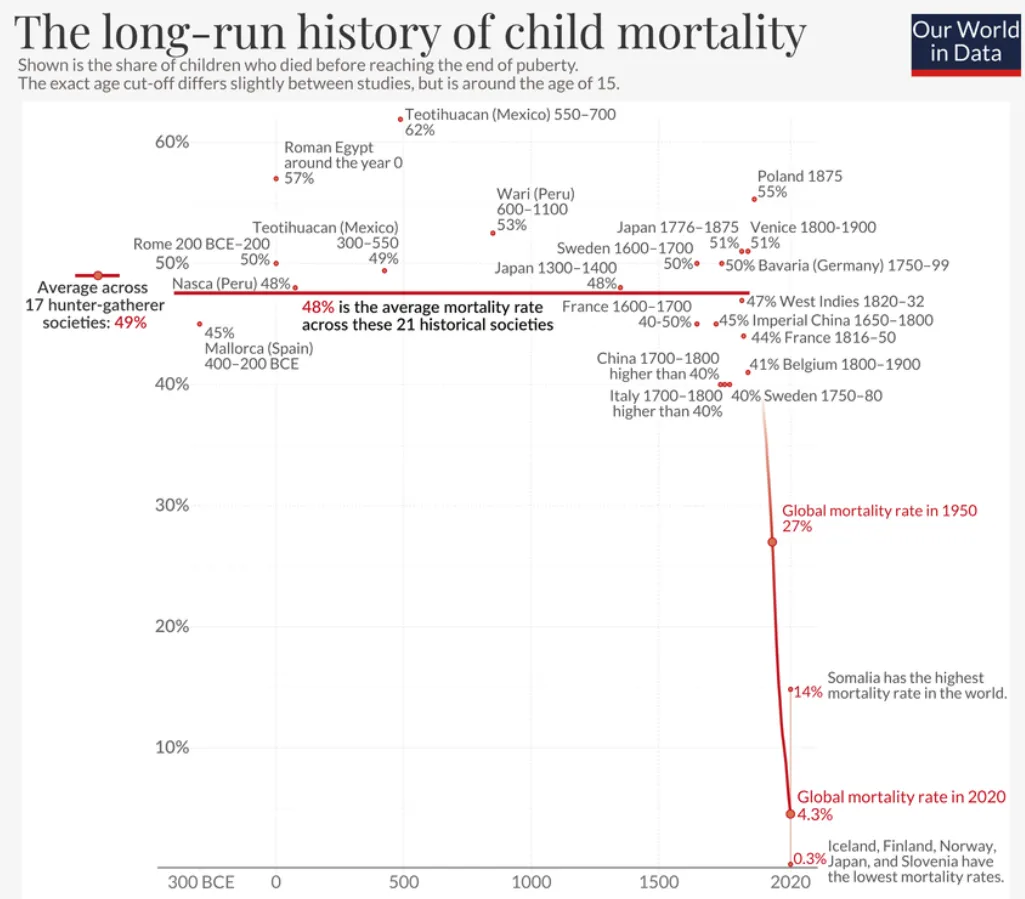
It wasn't until relatively recently that the childhood mortality plummeted from 50% of children dying to the current 96% surviving. And in places like Finland, it is 99.7% surviving. Italian renaissance artists (privileged) lived on average to about 62 years of age. But the actual average, was about 50. Even in 1901, the average life expectancy was only 62.
Have you ever thought how this affects us?
Just think, there was essentially no elderly diseases, almost zero Alzheimer's or dementia. Even if they could do the surgery, no one needed a hip replacement. But, have we evolved to factor in other considerations?
Last night with my friend we were talking about retirement plans and I brought this up. We aren't designed to consider the future, because through nearly the entirety of our evolution, we didn't have to think very much past our next meal. And until the last couple hundred years, we didn't have to think about what we would do when we retired, when we couldn't work any more - because we were physically and mentally capable. We didn't retire, we died working.
But, once we were able to store value and innovate our health, we started to live past our useful use-by date and had to start considering what we are going to do. Most of our approach relied on family connections to care for us, but at least in the western world, this has shifted. But, whatever approach we take, we have to think about it decades before we need it, and we haven't evolved to do this.
Look at how most people live, knowing that they have to prepare for their non-working future, but struggling to do so. Most of us live largely hand to mouth, spending what we get, whether we get paid weekly, bi-weekly or monthly. We can look and prepare far enough into the future to buy groceries and pay our rent, but most struggle to save for anything that might be "just" a year away, like a holiday. So we go into debt instead. Even though we have been storing value for 20,000 years, we haven't mentally or emotionally evolved innate strategies to put this into consideration for our own future wellbeing.
For example, if a person earns 1000 and is meant to save 10%, how easy is it? The challenge is that the other 900 goes on immediate needs, food and rent, but that last 100, the much smaller portion, isn't going to make an impact on wellbeing for decades. This makes it nearly impossible for most of us to consistently save (or invest) because it just isn't in our nature to look that long. So, governments dictate retirement plans, even though they are inefficient and less impactful than other methods.
Some people try to get around our inability to prepare long by making that 10% (or whatever they choose) an automatic payment, so then it becomes like rent, something immediate. Others handle it like their groceries, making investing a process, a consumable activity. But, most of us, fail to do anything and as a result, most of us struggle in the future, never fully preparing for living past our value-adding use-by.
We haven't evolved fast enough to live as long as do. We haven't evolved for our bodies to naturally handle food availability. And we definitely haven't evolved fast enough to mitigate the risks of digital culture, where we are disconnected from each other, no longer having children to care for us in the future, or building the relationships that matter, that make us feel important, to bring purpose and like life is worth living. We see the affects of our inability to evolve to the changing conditions daily, yet we aren't evolved enough to adjust our behaviors for what we experience.
The fact is, most of us are living longer, but we aren't necessarily living a better life, because we haven't been able to shift for the changes in our culture and personal habits. We keep trying to "get back" to different times and "live in the moment" without considering that the culture we live in daily, has shifted and that kind of behavior is no longer suitable for the lifestyles we have, nor the length of time we will live. It might lead to momentary wellbeing, but leave us stranded for what might be the majority of our lives.
It is no wonder so many people are struggling in this life, depressed, lonely, in debt, unhappy with their conditions, disconnected, listless, disinterested, unmotivated and purposeless - because we are acting in ways that are not suited to the culture we have created, because we haven't evolved to do so. Maybe in another 10 or 20 thousand years we might have started to catch today, but we are unlikely to make it. Because, what we are doing to the environment is likely to make the conditions unsurvivable, but because it takes long-term investment to affect, we aren't likely to do enough to repair or prepare for the outcomes.
We just don't think long enough. But perhaps, it is because we just can't.
No matter how long we live.
Taraz
[ Gen1: Hive ]